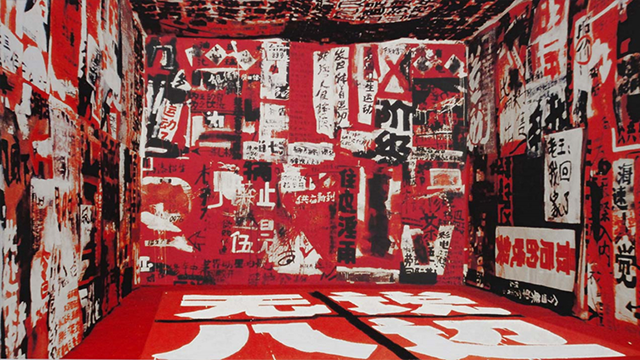
Abstract: Robert Rauschenberg not only established himself as a vanguard figure in the global art scene but also left a profound and lasting impact on the development of contemporary Chinese art. Through the “ROCI China” exhibition, Rauschenberg facilitated a dialogue between the essence of Western modernism and China’s rich cultural traditions, offering Chinese artists a unique opportunity to transcend conventional boundaries and explore new artistic languages. Particularly, his advocacy for practices such as ready-mades, collage, and installation art not only dismantled the boundary between art and life but also ignited a wave of innovative thinking among Chinese artists concerning form, material, and expression. Rauschenberg’s artistic philosophy prompted a critical reevaluation of the definitions and boundaries of art within the Chinese art world, contributing significantly to the “85 New Wave” movement and the subsequent awakening of contemporary Chinese art. Many artists, influenced by Rauschenberg’s focus on “chance/contingency” and the use of “everyday objects”, began to boldly experiment with novel modes of artistic expression, deconstructing traditional artistic languages while incorporating social and cultural critique. In the works created by these artists, we not only witness the absorption and transformation of Western modernist influences but also observe the independent exploration of Chinese contemporary artists within the context of globalization. Through Rauschenberg’s artistic impact, Chinese contemporary art embraced a more diversified and open creative direction, blending traditional artistic forms with the challenges of modern society, and constructing a multidimensional artistic world. Whether in the sculptural works of Sui Jianguo (隋建国) or the politically charged critiques of the “Red Humor” group, these creations, inspired by Rauschenberg’s art, exhibit a powerful individuality and artistic breakthrough. The artistic exchange fostered through the “ROCI China” exhibition not only bridged the gap between Eastern and Western cultures but also provided new possibilities and directions for the development of contemporary Chinese art.
Keywords: Robert Rauschenberg; “ROCI China”; Cross-cultural Communication; Multidimensional Exploration; Aestheticization of Everyday Life