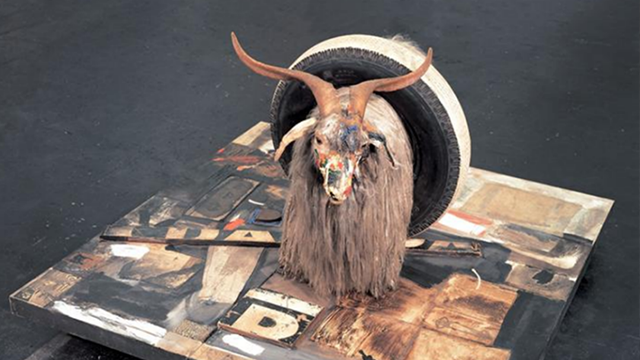
Abstract: Robert Rauschenberg's Monogram (1959) exemplifies a pivotal moment in modern assemblage art, merging diverse artistic media and symbolic expressions to challenge traditional modernist ideologies. This study examines Monogram through the lenses of contradictory oppositions and the multifaceted interpretations of symbolism, employing semiotic theory, modern art theory, social critique, and postmodernist discourse. The analysis explores Monogram as both a formal innovation and a socio-cultural critique, focusing on its integration of mixed media, figuration, abstraction, and symbolism to interrogate questions of identity, consumer culture, and symbolic alienation within modernity.
Key Words: Robert Rauschenberg; Monogram; mixed media; ready-mades; contradiction