
Abstract: This paper analyzes the multiple functions of the urban public space as a cultural display platform is analyzed and the key position and value of public space in modern urban planning are emphasized in this paper. The conceptual framework of urban public space display is constructed through interdisciplinary research, literature research, field research and deductive reasoning and the valuable experience and inspiration are provided by the analysis of successful cases at home and abroad to urban planners and designers.
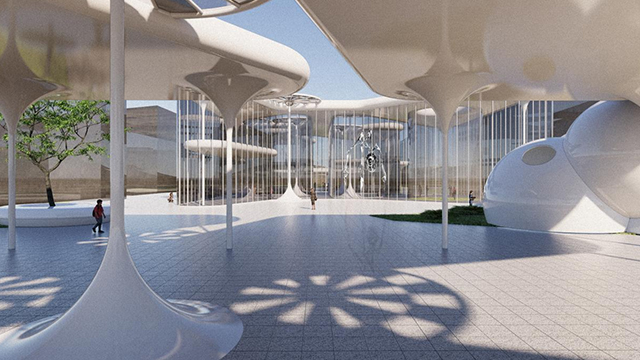
In terms of specific design strategies, three methods (spatial nesting, structural cascade and morphological fusion) are proposed in this paper. The spatial nesting enhances the unity and identity of the space by visual multi-level and nesting effects based on the transparency principle. The structural cascade provides visitors with a comprehensive and layered spatial experience by clearly demonstrating the interaction between the structure and the potential structure. As for the morphological fusion, a unified and changing spatial experience is created by repeating and nesting spatial elements on different levels pursuant to the fractal philosophy.
The application of topicality, narrativity and multimedia interactivity of display design in the urban public space design is discussed in this paper. The introduction of topicality can give the public space a unique cultural identity and story background. The narrative design is capable of showing the memory and history of the city, telling the story of the community, reflecting the development vision of the city and showing cultural diversity. The application of multimedia interaction technology can greatly enrich the experience and interaction of space. With Jinan University Town commercial street public space as an example, how the above design methods is applied to the real case is shown. The needs of residents and students are met and the cultural display of Jinan is deepened by embedding the "parade corridor" into the strip square, integrating the concept of "72 springs" in Jinan and the design of cascaded structure and morphological fusion.
Key words: Space Display Design; Spatial Nesting; Structural Cascade; Morphological Fusion; Interactive Design