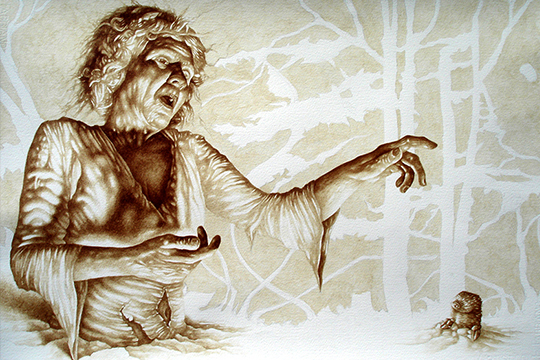
Abstract: This essay explores the profound symbolism of blood in art, focusing on Frida Kahlo’s works and their influence on avant-garde artists. Blood, as a visceral and symbolic medium, serves as a powerful metaphor for pain, resilience, and existential inquiry. Kahlo’s paintings, such as The Suicide of Dorothy Hale (1938) and Tree of Hope, Remain Strong (1946), utilize blood to articulate physical suffering, emotional turmoil, and defiance against fate. In The Suicide of Dorothy Hale, Kahlo controversially employs the traditional Christian “ex-voto” or “retablo” form to depict a suicide, blending sacred and secular narratives, while challenging religious orthodoxy. Tree of Hope, Remain Strong juxtaposes her physical agony with a resolute spirit, symbolizing the duality of human vulnerability and strength. The essay further examines how blood as an artistic medium transcends Kahlo, influencing artists like Yves Klein, Michel Journiac, Gina Pane, and Vincent Castiglia. Klein’s Le peintre de l’espace se jette dans le vide (1960) uses bodily risk to explore immateriality, while Journiac’s Messe pour un corps (1969) and Pane’s Le corps pressenti (1975) transform blood into a ritualistic and subversive force, interrogating identity and societal norms. Castiglia’s use of his own blood as paint underscores the intimate connection between life and art. Collectively, these artists expand the symbolism of blood beyond personal suffering, exploring themes of mortality, transcendence, and the corporeal. Their works, though distinct, form a cohesive narrative that redefines blood as a medium for profound artistic and existential expression, challenging traditional boundaries and enriching the discourse on art and human experience.
Keywords: blood in art; visceral symbolism; existential suffering; artistic transcendence; corporeal rituals; metaphysical exploration