
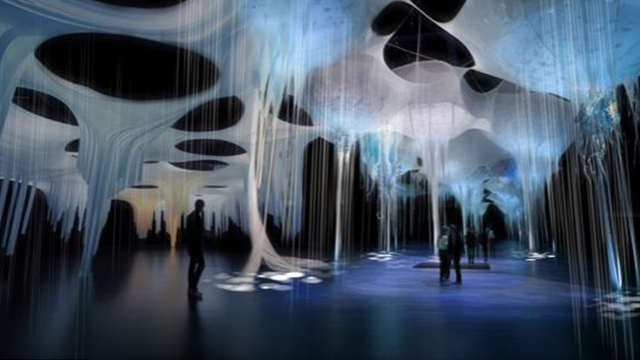
Abstract: Exhibition spaces, as material carriers and existential realms for presenting and communicating information, are inseparable from human perception and emotional experiences. In the contemporary design of exhibition spaces, it is crucial to focus on the audience, shifting from an object-centered to a human-centered logic. This paper aims to explore the key factors in the integration of experience and narrative in exhibition spaces from the Perspective of Embodied Cognition—connectivity, nonlinearity, interactivity, and fluidity—and analyze how these factors influence and shape the design of exhibition spaces. Through specific case studies, it emphasizes the importance of creating immersive and multi-sensory perception-fused narrative environments and discusses the possibilities for the future development of exhibition space design.
Keywords: Exhibition Space Design; Embodied Cognition; Spatial Narrative; Body Theory