From February 3 to 10, 2025, under the guidance of the UNESCO Chair on Creativity and Sustainable Development of Rural Areas, the Institute of Cultural Industries of Peking University and the Institute of Cultural Studies of Universitas Brawijaya, Indonesia,co-organized the Mountain and Sea Runs to the Youthful Countryside. The Indonesia workshop was held in Malang and Yogyakarta. The workshop was led by Mr. Xiang Yong, Chairholder of UNESCO's Countryside Creation Chair, Director of Peking University's Institute of Cultural Industries, and Professor of Peking University's School of Arts, and attended by more than 20 teachers and students from Peking University and Universitas Brawijaya. Through academic exchanges, cultural study tours and creative practices, the event deeply explored the potential of cooperation between China and Indonesia in the fields of rural cultural heritage, creative economy and sustainable development, and provided innovative ideas for the revitalization of villages in China, Indonesia and Asia.
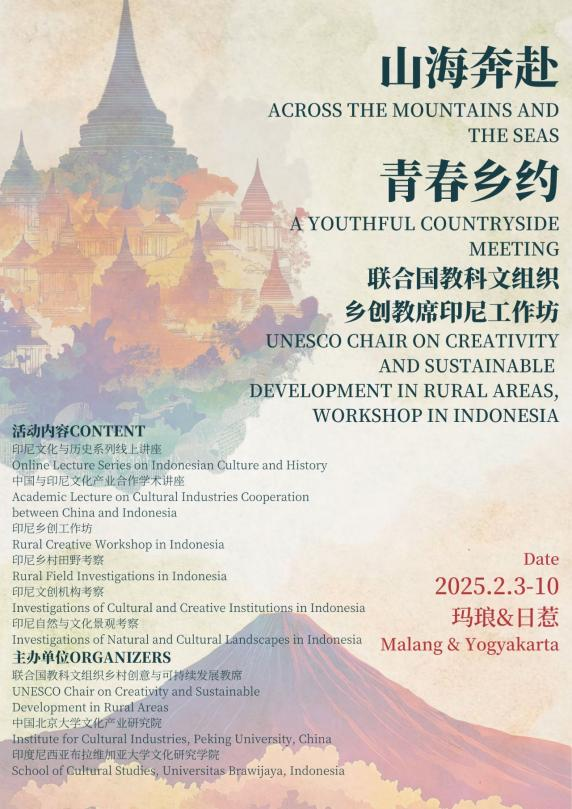
Event Poster
Academic Exchange:Promoting Cultural Understanding and Academic Cooperation between China and Indonesia
Prior to the field trip, the workshop provided participants with a rich knowledge base through a series of online lectures. three online lectures were organized by the University of Brawijaya on January 24th and January 31st under the titles of "Indonesian and Chinese Descent", "Expedition to East Java, Indonesia", and "Thematic Villages in Malang". On January 24th and 31st, the University of Brawijaya organized three online lectures on the topics of "Indonesian and Chinese Descendants", "Study Tour in East Java", and "Theme Villages of Malang", in which the three lecturers, Padmo Adi, Yayuk Windarti, and Yang Nadia Miranti, gave detailed presentations on the history, culture, local customs, and history of the province of East Java, as well as the history of Malang. culture, local customs, and the characteristic development model of Malang villages. After the lectures, the workshop participants had an in-depth exchange with the lecturers. This targeted learning helped the participants to understand the history, culture and local conditions of East Java and Malang villages in advance, which provided them with a systematic theoretical foundation and a comprehensive observation perspective for their subsequent research and planning.
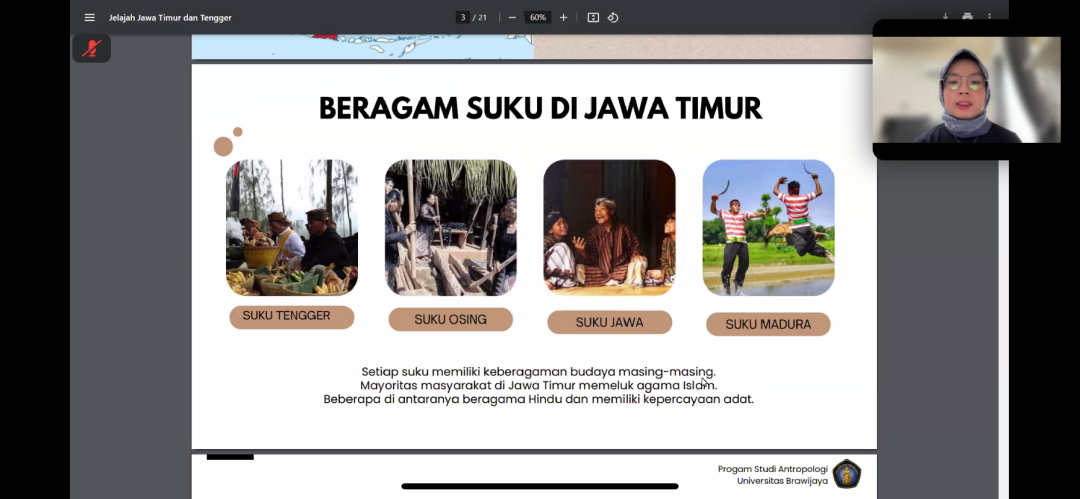
Online Lecture Series
On the morning of February 4, Xiang Yong led the workshop members to visit the University of Bravijaya campus in Malang. Widodo, President of the University of Bravijaya, Andi Kurniawan, Vice President of the University, and Hamamah, Dean of the Faculty of Cultural Studies, met with the students and teachers of Peking University. Kurniawan introduced the development history, discipline construction and student cultivation of the University of Bravijaya, and Xiang Yong introduced the international student education and talent cultivation of Peking University's School of Arts and Institute of Cultural Industries. The two sides had an in-depth discussion on the cooperation in the field of culture and creativity, and expressed their willingness to strengthen the cooperation in the future in the development of local culture and the cultivation of young creative talents.
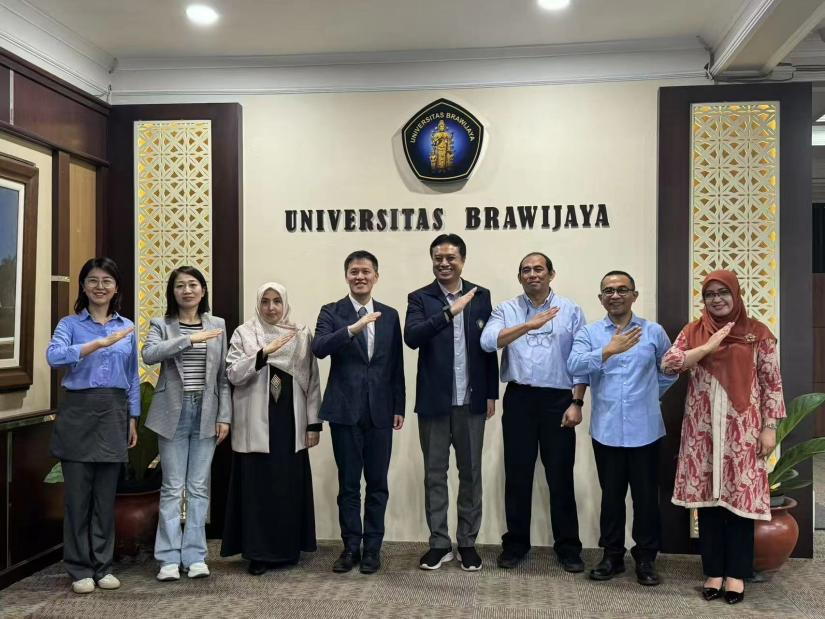
Dean Xiang Yong meets with the leadership of the University of Bravijaya
On the afternoon of February 4, Xiang Yong was invited to give a lecture on "Locality and Asianness: The Current Situation and Development Prospects of Cultural Industries" at the Faculty of Cultural Studies of the University of Bravijaya. Cooperation between China and Indonesia". Xiang Yong explained in detail the theoretical meaning of locality and Asianness, reviewed the historical and cultural exchanges between China and Indonesia, and pointed out the new opportunities for cultural industries cooperation between the two countries under the "Belt and Road" initiative. Xiang Yong proposed that the two countries, while safeguarding the uniqueness of local cultures, should jointly explore global communication modes reflecting the "Asian narrative", actively collaborate in digital transformation and technology, and promote the sustainable development of the countryside through cooperation in the fields of cultural tourism and handicrafts. Finally, Xiang Yong shared China's innovative model in the field of art and rural construction, taking Bicheng Village in Xuanhan, Sichuan Province and Yoli Village in Nanxun, Zhejiang Province as examples, demonstrating China's experience of cultural creativity empowering the development of rural agriculture, culture and tourism.
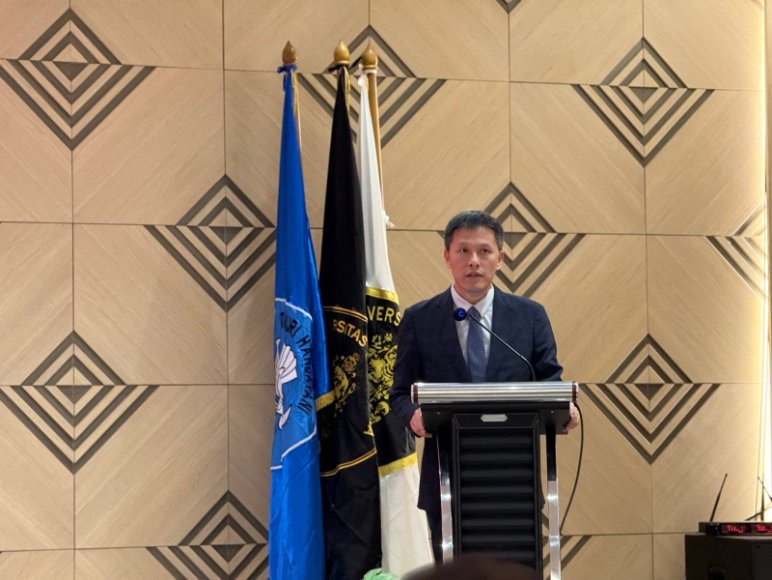
Dean Xiang Yong gave a keynote lecture
After the lecture, experts and scholars in the field of cultural studies of the University of Brawijaya showed great interest in China's innovative practices in the field of art township construction, and looked forward to the future deep cooperation between China and Indonesia in the field of cultural industry.
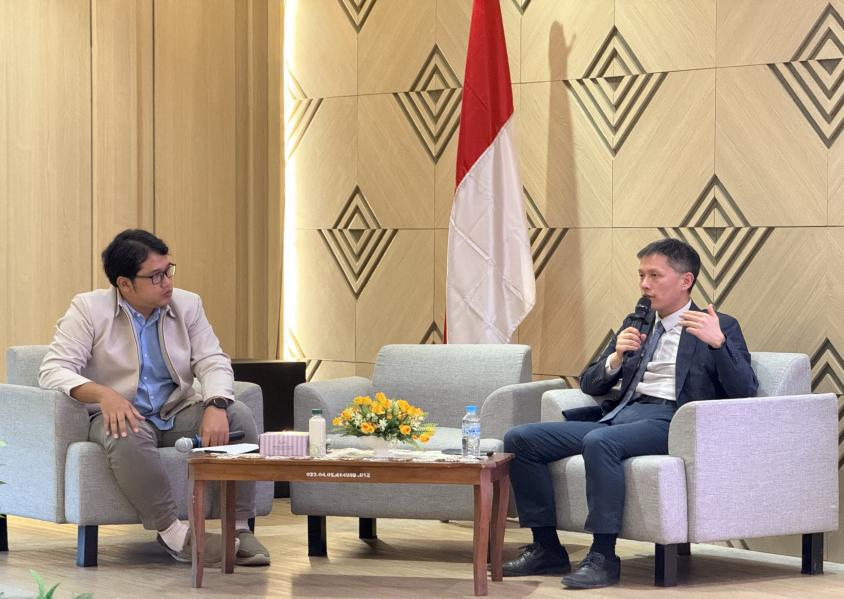
Dean Xiang Yong answered questions after the lecture
On behalf of the Faculty of Cultural Studies of the University of Brawijaya, Hamama presented the workshop members with gifts of Indonesian specialties, and Xiang Yong, on behalf of the Institute of Cultural Industries of Peking University, returned a souvenir of Peking University's cultural creations.
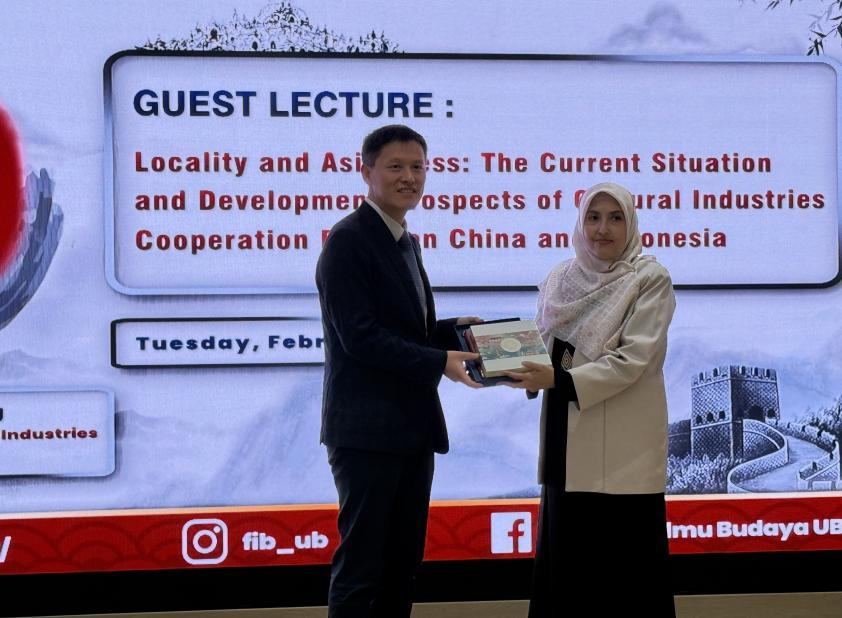
Dean Xiang Yong and Dean Hamama exchanged gifts
Cultural Study Tour: Perceiving Indonesia's Modern Transformation from Traditional Crafts to Cultural Heritage
On the morning of February 5, workshop members went to Batik Soendari in Malang to learn the steps of batik, examine various types of batik products and, under the guidance of the batik artisans, personally outline the pattern with wax oil and then fill in the color with natural plant dyes. Workshop members fully experienced the fun of batik art and felt the unique charm and cultural value of traditional Indonesian handicrafts. Teachers and students from Peking University felt that batik is not only a skill, but also an expression of Indonesian people's belief in nature and faith; the difference in craftsmanship between Chinese tie-dye and Indonesian batik precisely reflects the different interpretations of "white space" between the two cultures.
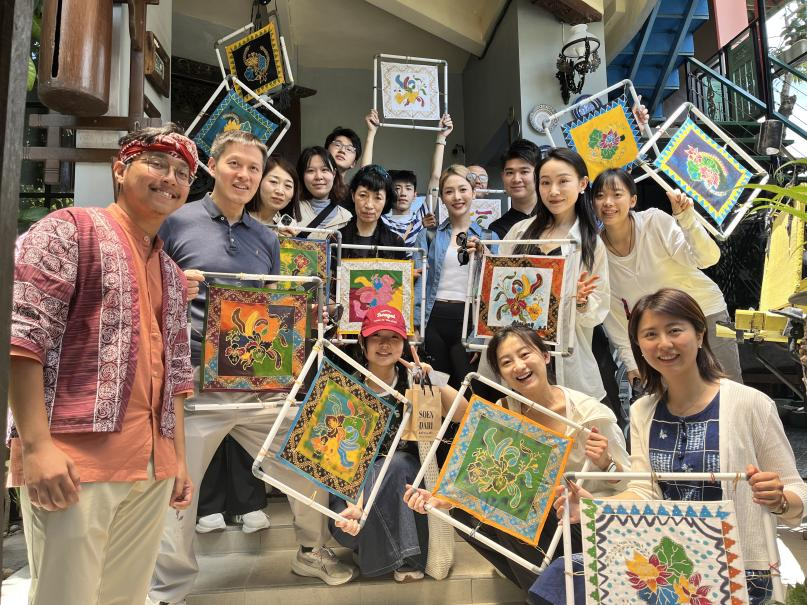
Inspection of Indonesian Batik Soendari
At noon, workshop members traveled to the Polowijen cultural village near Malang to enjoy the traditional Indonesian mask dance Topeng and experience the mask painting process. In the afternoon, members visited Kajoe Tangan, a cultural heritage neighborhood in downtown Malang, known for its diverse architecture from the Dutch colonial period.
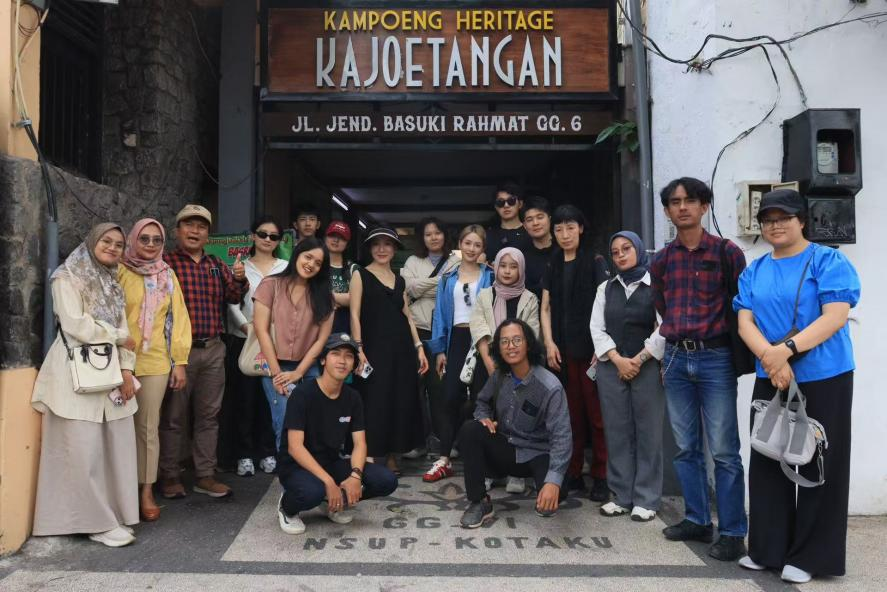
Visit to Kajoe Tangan Cultural Heritage Site
Workshop members experienced the lifestyle of local residents and had a discussion with the management team of Kajoe Tangan. The two sides exchanged views on the topic of "how to transform historical space into a modern living scene", as well as brand communication, business optimization and standardized management of Kajoe Tangan. From the perspective of balancing cultural value and market demand, the workshop members made suggestions on environmental hygiene, parking lot, public cultural space, B&B business, commercial support, and local cultural excavation and storytelling.
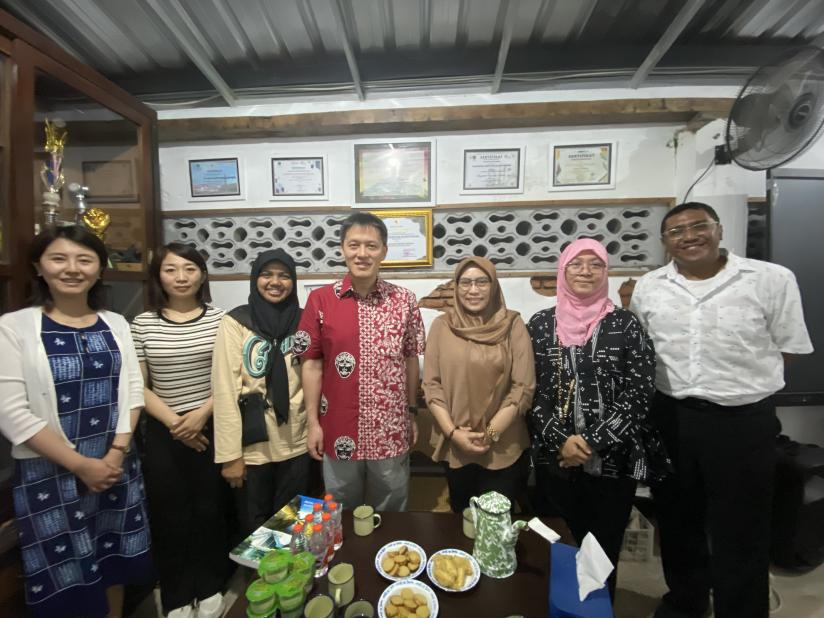
Meeting with Kajoe Tangan's management team
On the morning of February 6, accompanied by Dean Hamama, the workshop members investigated the development of special agriculture and folk handicrafts in Batu City. In Kampong Rechoso Village, members visited a local traditional handicraft workshop to learn about the design concepts, production process and sales of handicrafts such as woodwork and weaving.
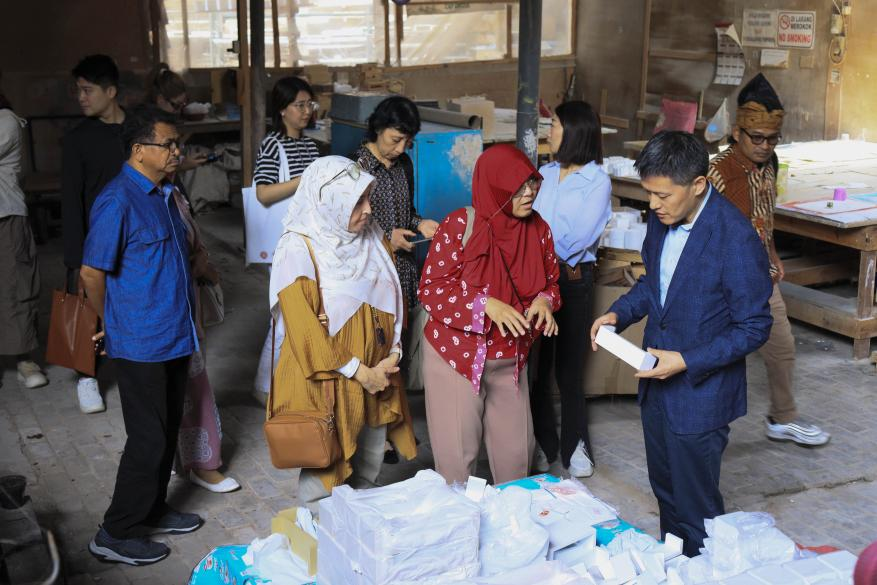
Inspection of Kampong Rechoso handmade wood products production
Members visited the Bulukerto Apple Orchard to learn more about the planting, picking, sorting, processing and marketing of local specialty apples.
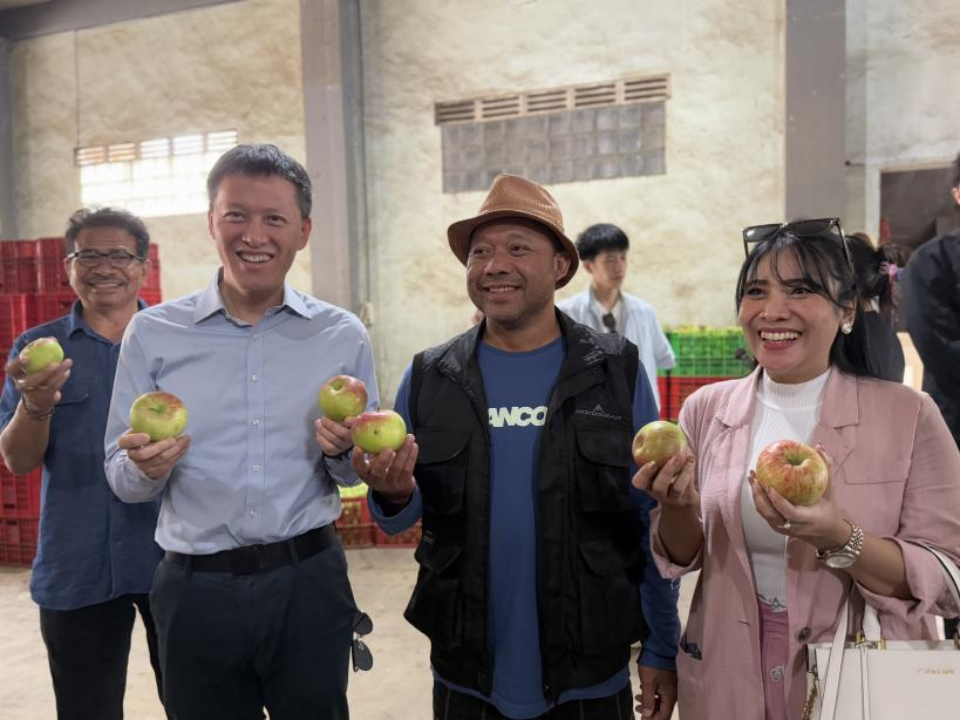
Visit to Bulukerto Apple Orchard
In Kaliwatu, Xiang Yong had in-depth exchanges with representatives of Batu City Government and Batu City Arts Council. Both sides hope to carry out closer cooperation in the field of cultural industry, drive more scholars from China and Indonesia to provide assistance to the villages in both countries, optimize the development potential of the community, and accelerate the development of local characteristic industries.
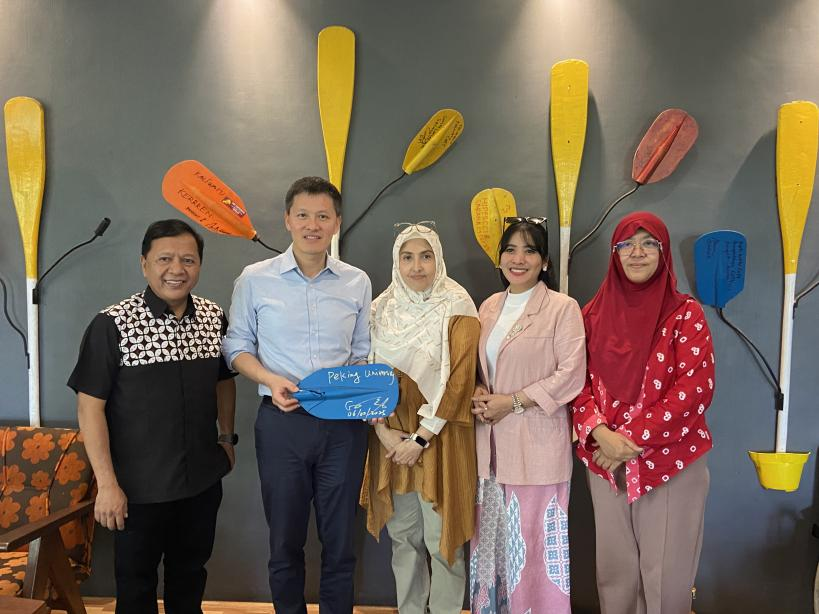
Dean Xiang Yong communicated with representatives of the Batu Municipal Government and the Batu City Arts Council
On February 7, workshop members visited the volcanic landscape of Bromo and then traveled to the village of Tengger, at the foot of the volcano, to observe an ethnic wedding ceremony being held in the village. The village is Hindu and is an important part of Indonesia's multiculturalism. Wearing colorful woven scarves, the villagers offered rice and flowers to the volcano's spirits. Volcanoes are both a threat and a gift, teaching people to respect nature. Through the interaction with the villagers, the workshop members learned about the historical origin and cultural heritage of the Tengger people and the deep emotional bond between them and the Bromo volcano, and further realized the concept of harmonious coexistence between human and nature, human and society in Indonesian culture.
On the morning of February 8, the workshop members arrived at the Borobudur Temple, one of the Four Wonders of the Ancient East and a World Heritage Site. This Buddhist building is famous for its magnificent architectural structure, elaborate and exquisite bas-relief art and profound cultural meaning, and its architectural style and Buddhist thought system reflect the multicultural mingling and evolution in Indonesian history. With the professional explanation of the docent, the workshop members observed the sculptures and murals in detail and tried to understand the historical background and narrative lineage.
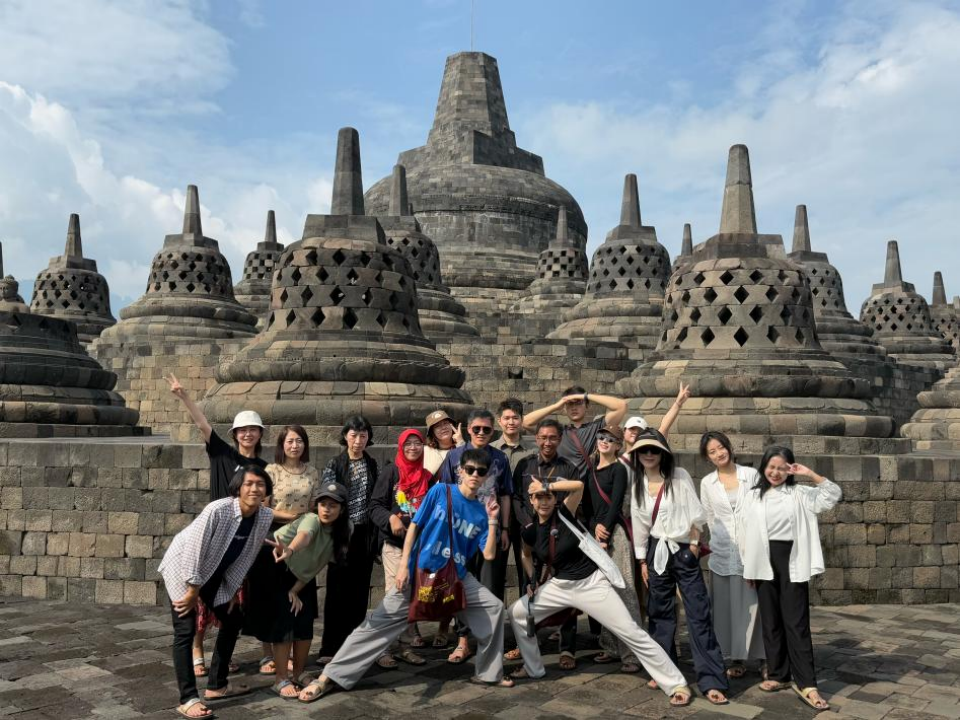
Examining the Borobudur Temple
On February 8, the workshop members went to a brown sugar workshop in Dusun Jligudan Village, Yogyakarta, to observe the production process of traditional Indonesian food. The artisans demonstrated the whole process of climbing coconut trees to collect nectar and brewing brown sugar, which made the teachers and students of Peking University feel the long and arduous labor of the artisans behind the seemingly ordinary food.
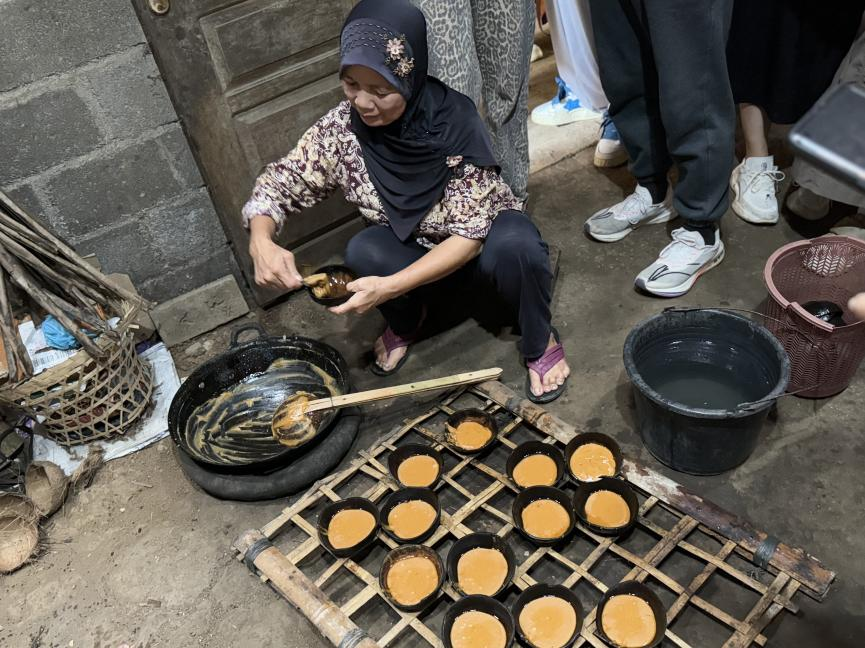
Examining the brown sugar production process
Afterwards, the workshop members participated in a cultural and artistic experience with a strong Central Javanese flavor in the Yogyakarta countryside. Under the guidance of Indonesian artists, members tried to play Gamelan, a traditional Javanese music, and learn traditional Javanese dance, so as to experience the charm of music and dance art in cross-cultural communication. The members also visited the gallery of Indonesian artist Mr. Soni and appreciated the deep understanding and innovative expression of local culture by local artists.
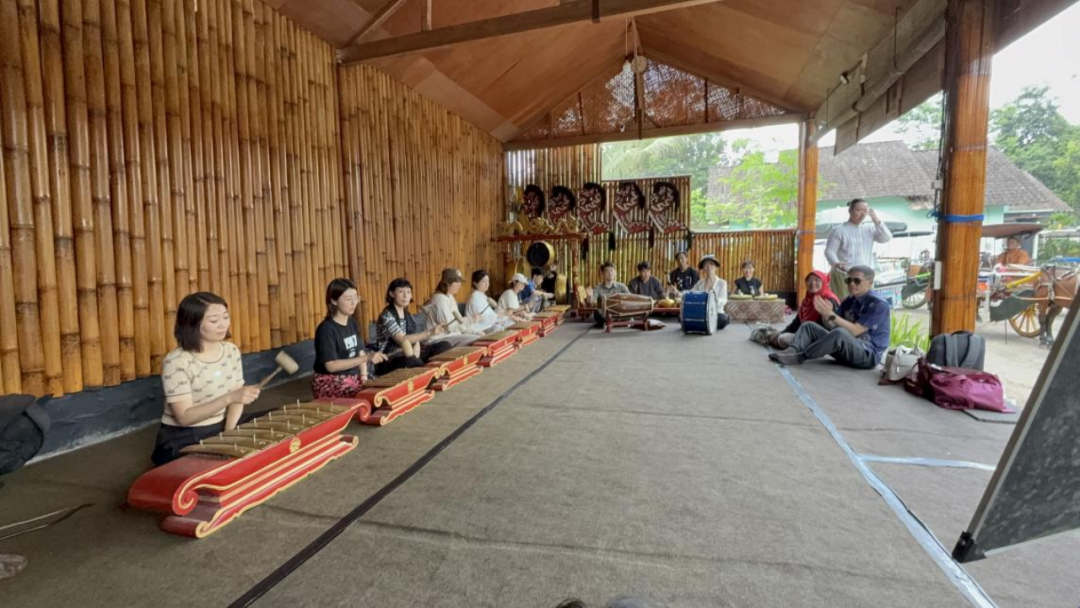
Ensemble playing Javanese traditional music Gamelan
On the morning of February 9, workshop members traveled to Punthuk Setumbu to see the unique architectural landscape. The entire building, in the shape of a giant dove, sits on high ground near the temple of Borobudur, surrounded by a lush tropical forest landscape. Members admired the structural layout of the building and the art exhibits, and felt the perfect combination of culture and landscape.
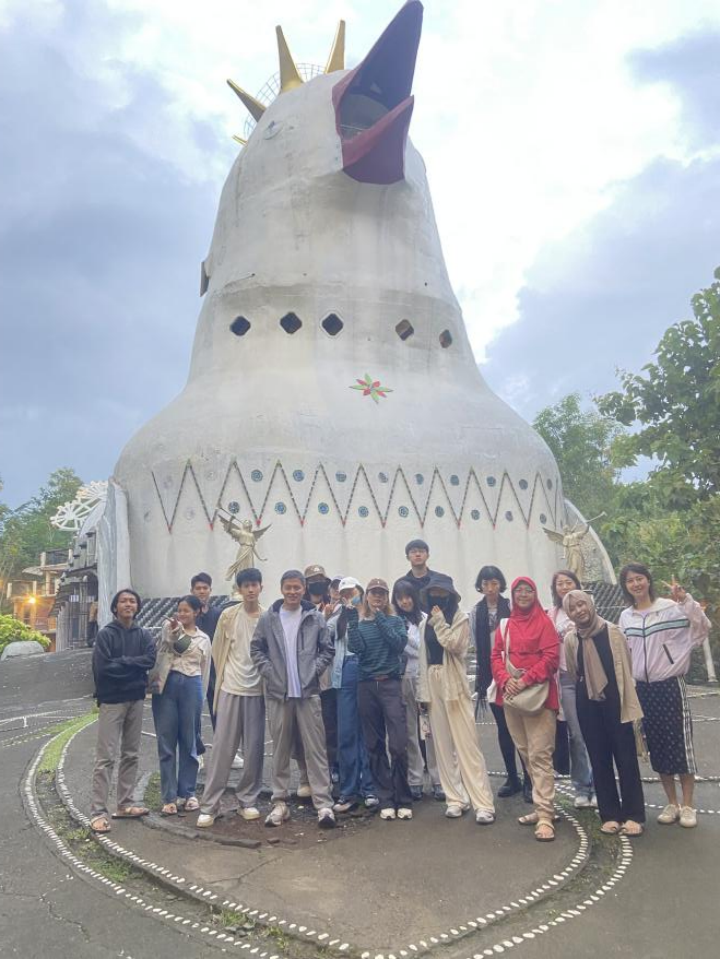
Examining the architectural landscape of Pontchartrain-Setumbu
Afterwards, the participants went to Pawon, a local cultural heritage site, to examine the local crafts of making cat poop coffee and honey. These traditional crafts reflect the clever use of natural resources by the Indonesians and show their wisdom of life accumulated through labor.
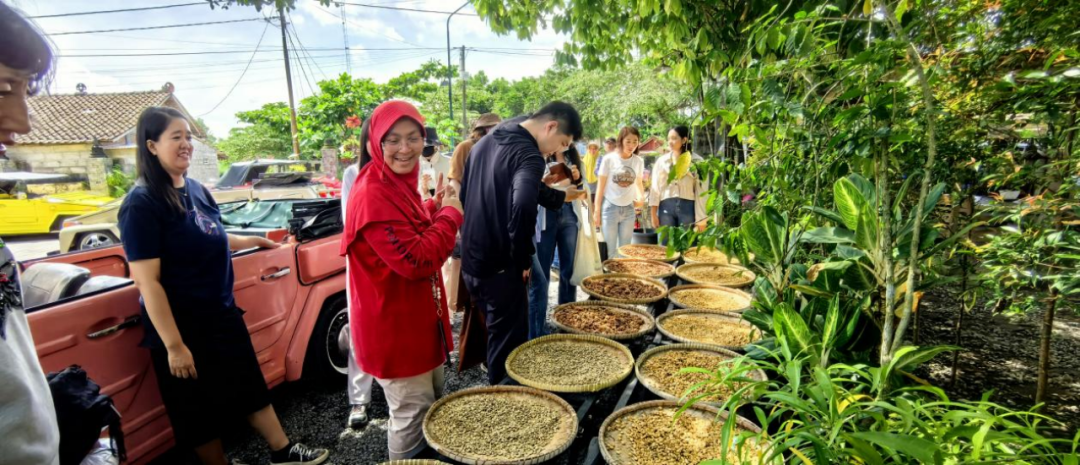
Examining the process of making cat poop coffee in Indonesia
Participants also learned the art of Indonesian relief carving and tried their hand at simple relief carving in Omah Mbudur Village. At noon, at the Omah Garengpoeng Gourmet Workshop, Ms. Lily T Erwin, a renowned Indonesian gourmet, guided the participants to learn how to cook traditional Indonesian dishes with various types of food that incorporate herbs, spices, and fruits, which gave the participants an in-depth experience of Indonesia's unique cooking techniques and flavorful cuisine.
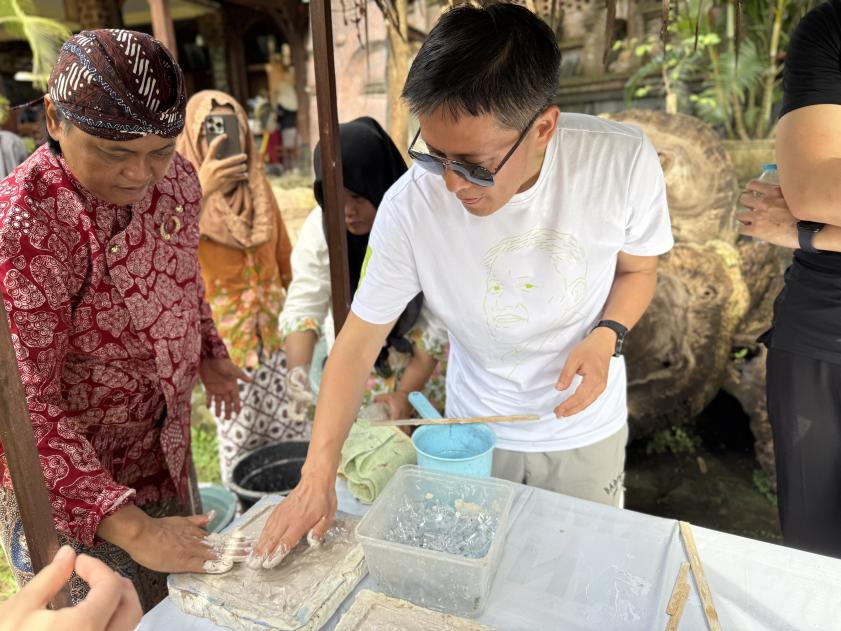
Trying to make an Indonesian relief
Creative Collision: Exploring the Future of the Countryside from the Perspective of Youth in Both Countries
In the afternoon of February 6, workshop members were divided into four groups, including special agricultural products, mask culture, soundscape and batik art, based on the field trip, and conducted a roadshow of creatively planned projects.
The first group proposed to develop green apple themed tourism products and experience activities, through the cross-border experiment of "apple + culture and creativity", combined with the Malang green apple to develop jam DIY workshop, fruit wood carving experience, and design the "apple story" integrating Chinese and Indonesian elements.
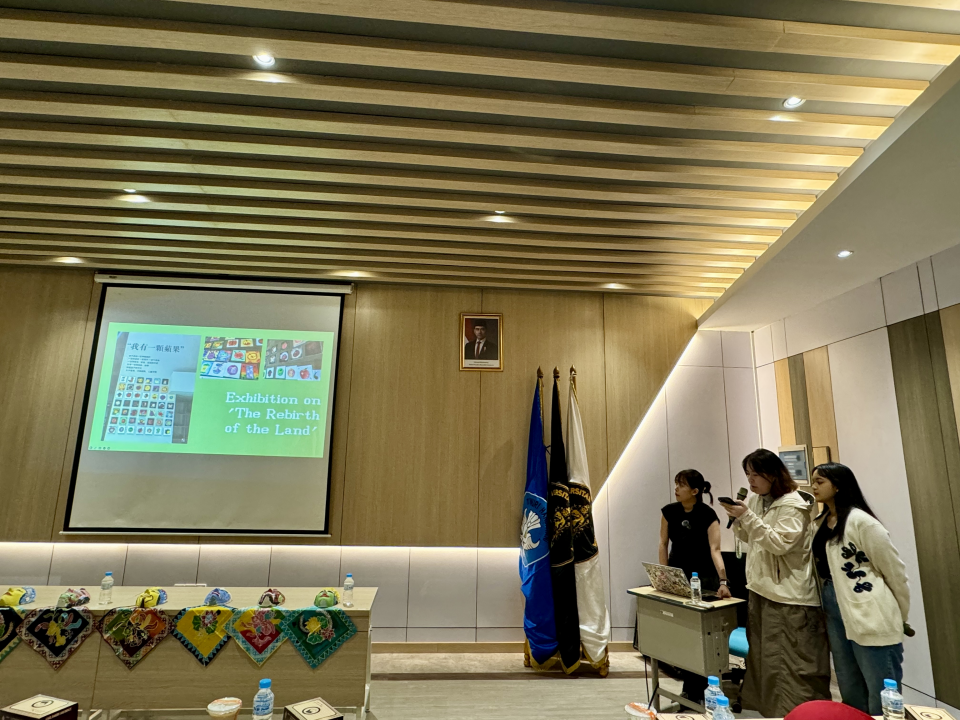
Group I Creative Project Planning Roadshow
The members of the second group searched for the homology of Asian culture through the symbolic connection between Chinese Peking Opera faces and Indonesian masks, established a database of Asian masks, and proposed to develop an AR interactive exhibition.
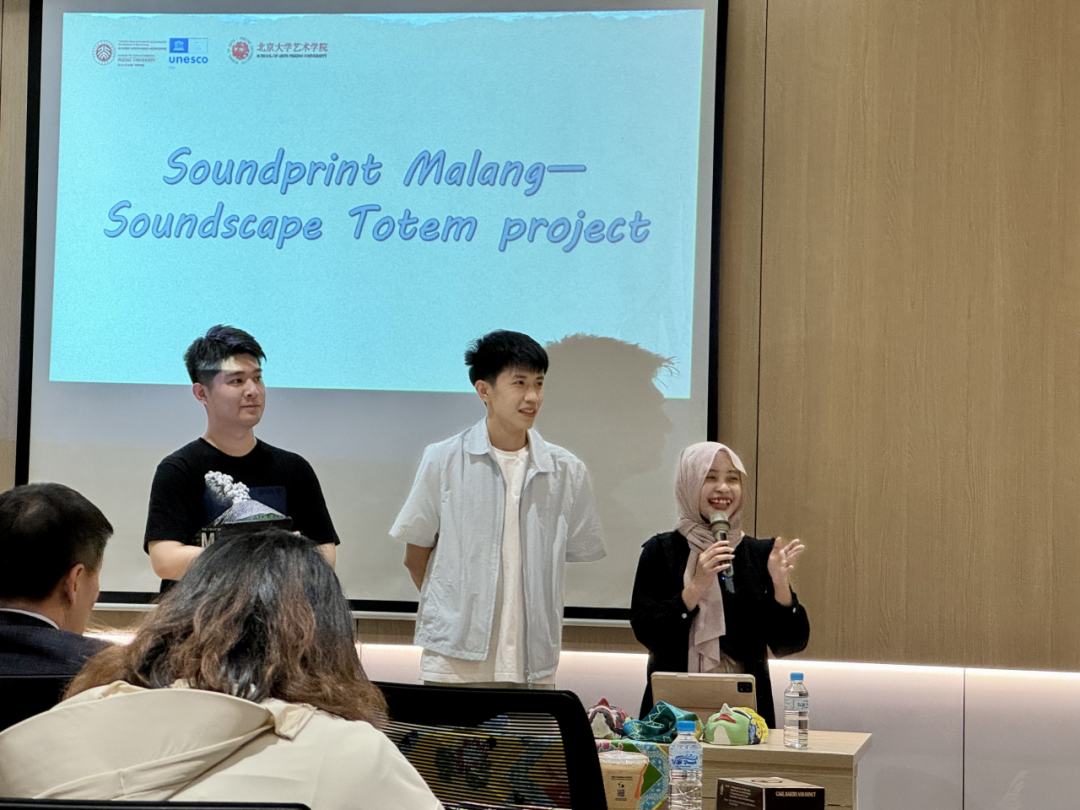
Group II Creative Project Planning Roadshow
The members of the third group collected unique local sound resources in Malang, developed tourism experience products with sound themes, and proposed a wearable device immersive guided tour program.
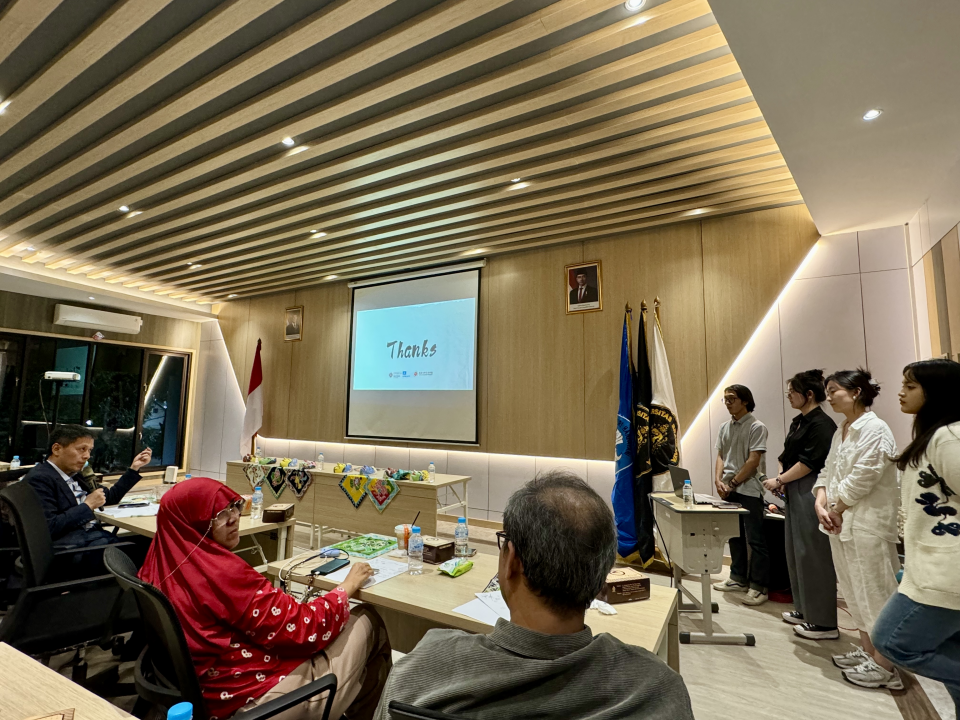
Group III Creative Project Planning Roadshow
Members of the fourth group designed an interactive experience program combining traditional batik techniques with modern social media, suggesting that Chinese and Indian netizen bloggers should be invited to live broadcast the creation of traditional handicrafts of the two countries and launch online challenges to attract more young people to pay attention to the culture of Malang batik.
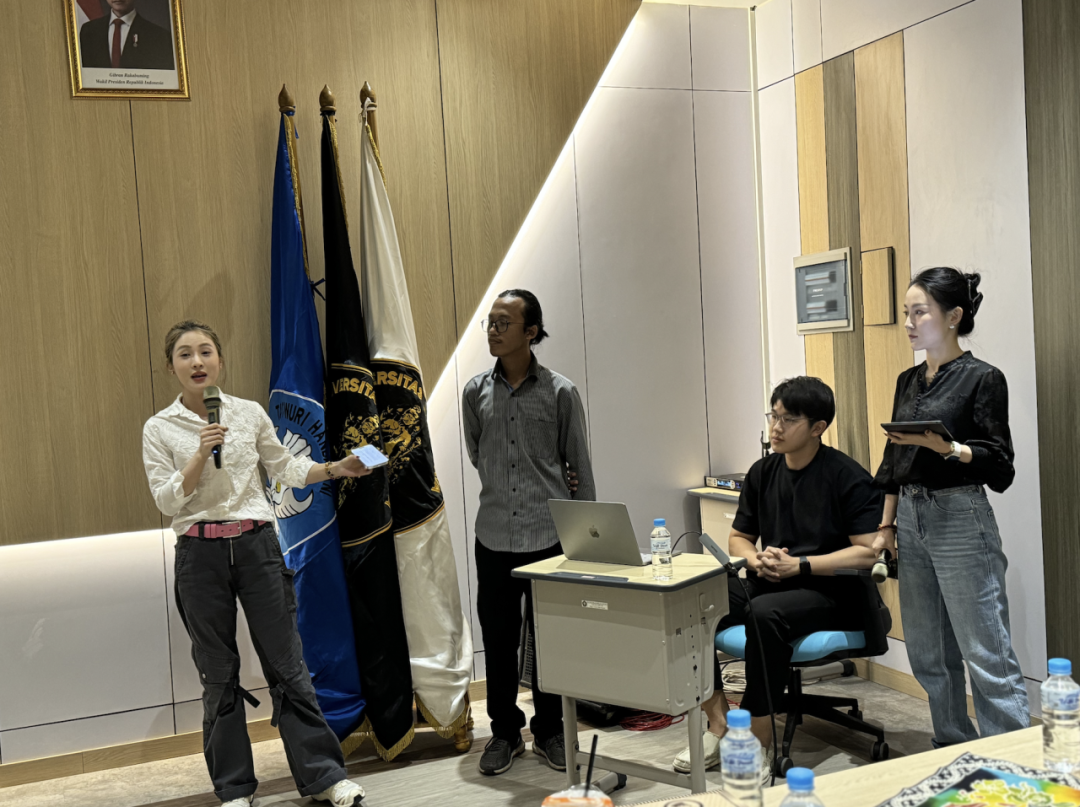
Group IV Creative Project Planning Roadshow
These creative solutions show the love and understanding of young Chinese and Indonesian students for Indonesian culture, breaking the stereotype of "Asian villages = traditional and backward", reinterpreting traditions with digital technology, and attempting to inject vitality into villages in the era of globalization.
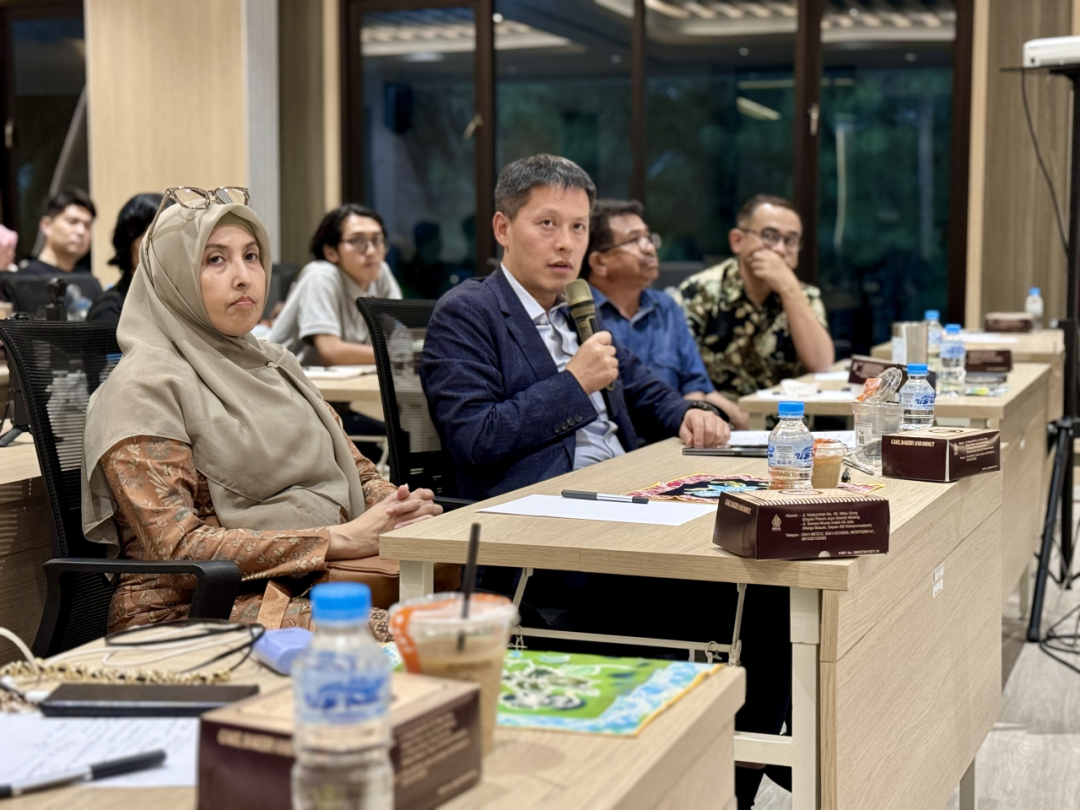
Review by Chinese and Indonesian professors
The "Youthful Rural Development Workshop - UNESCO Chair on Creativity and Sustainable Development in Indonesia" was successfully concluded. This activity opens the communication channel between the Institute of Cultural Industries of Peking University and the Institute of Cultural Studies of the University of Brawijaya in the field of rural creativity and sustainable development, which is not only a fierce collision of academic ideas, but also a positive exploration on the journey of rural revitalization in Asia, and lays the foundation of regional and country-to-country cooperation in rural creativity. During the event, scholars and young students from both countries went to many villages in Indonesia with full enthusiasm for rural development. They conducted in-depth research, ignited the fire of rural culture with the spark of creativity, and revitalized the ancient culture in the wave of the new era. In this process, the young people of the two countries are brave to take on the heavy burden, look at the development of the countryside from a global perspective, and interpret their responsibility and commitment with practical actions. Their efforts not only promote cultural exchanges and integration, but also build a bridge of friendship across the border.
Since its establishment in May 2024, the UNESCO Chair on Creativity and Sustainable Development in Rural Areas has always been committed to the sacred mission of promoting sustainable rural development worldwide. Looking ahead, the Institute of Cultural Industries of Peking University and the Institute of Cultural Studies of the University of Bravia will work closely together to promote a series of important cooperation projects, such as the Digital Archives of Asian Villages Program, the Residency Program for Young Creative Talents in Asia, and the Co-Branding Program for Asian Crafts. The two sides are committed to building a globally influential Asian crafts laboratory, creating cross-border rural IPs, and building a broader and deeper cooperation network by exploring diverse fields such as rural cultural research and creative economic development. By integrating the quality resources of both parties and gathering the wisdom and strength of all parties, the two sides will jointly explore the infinite potential of rural development, and dedicate more forward-looking and operable innovative solutions to the cause of rural revitalization in Asia and the world, so as to make Asia's countryside a happy home full of hope and vitality that carries dreams.